
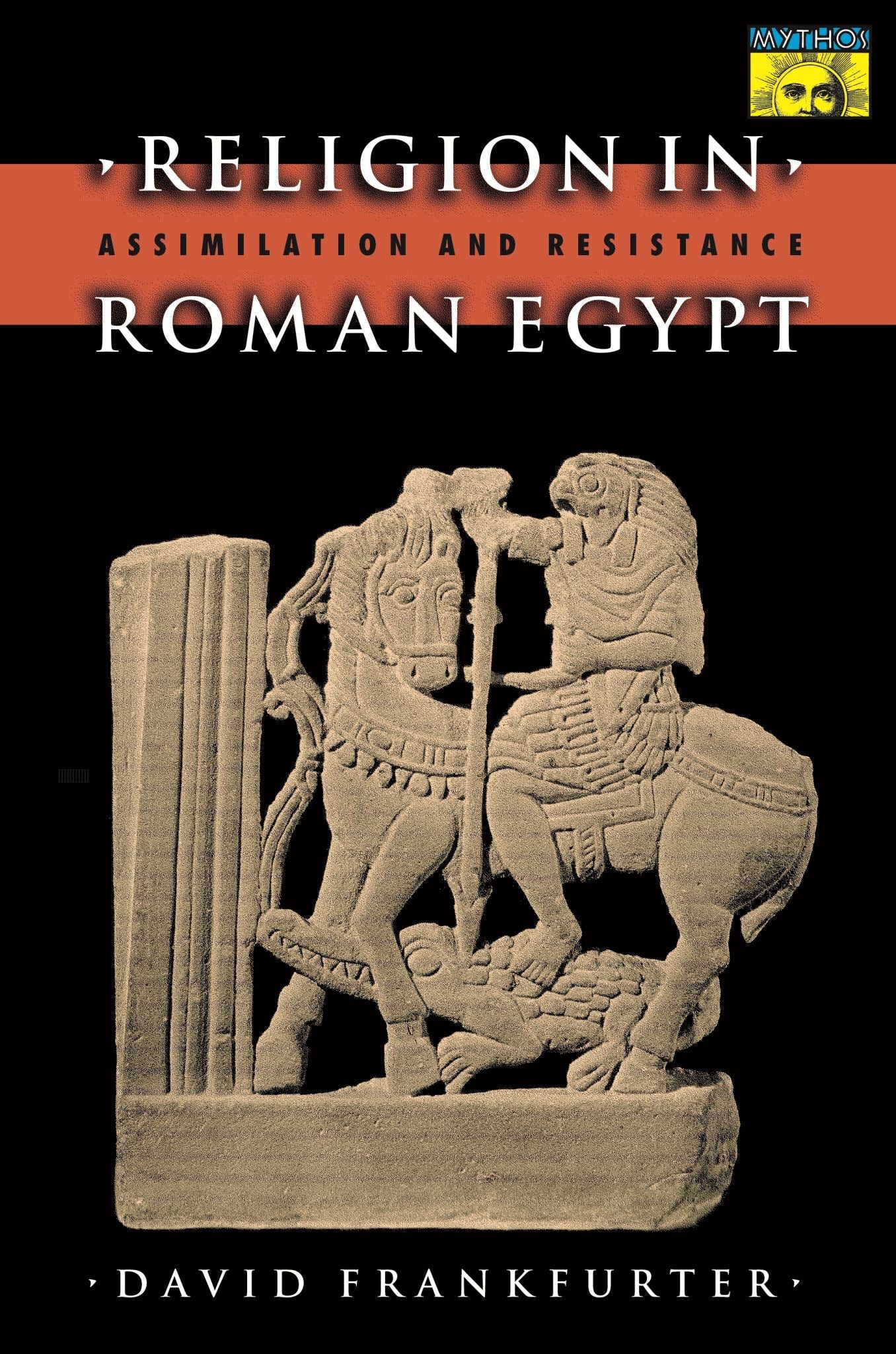

Description
Dive deep into the intertwined narratives of faith and tradition with 'Religion in Roman Egypt'. This captivating book, authored by the esteemed David Frankfurter, presents an in-depth exploration of cultural resilience in classical Egyptian religion from 100 to 600 C.E. As Christianity emerged and evolved in Egypt, Frankfurter meticulously examines the fate of ancient Egyptian beliefs, revealing that the religion did not simply vanish but thrived in local centers—villages and homes. The text delves into various forms of evidence such as papyri, saints' lives, terracotta figurines, and archaeological findings, illustrating how native piety endured amid the rise of Christianity, Hellenism, and Roman governance.
Through the lens of anthropology and folk religion, the book articulates the complex interplay between the enduring practices of the priesthoods and domestic cults, shedding light on the roles of oracles and magical texts. This nuanced analysis challenges the conventional narrative of a 'decline of paganism', portraying late Egyptian religion as a dynamic and resilient force. 'Religion in Roman Egypt' invites readers to rethink historical paradigms while exploring the remarkable persistence of pagan worship in a transformative era.
Condition: BRAND NEW
ISBN: 9780691070544
Format: Trade paperback (US)
Year: 2001
Publisher: Princeton University Press
Note: Shipping for this item is free. Please allow up to 6 weeks for delivery. Once your order is placed, it cannot be cancelled.
Note: Shipping for this item is free. Please allow up to 6 weeks for delivery. Once your order is placed, it cannot be cancelled.
Condition: BRAND NEW
ISBN: 9780691070544
Format: Trade paperback (US)
Year: 2001
Publisher: Princeton University Press
Description:
This exploration of cultural resilience examines the complex fate of classical Egyptian religion during the centuries from the period when Christianity first made its appearance in Egypt to when it became the region's dominant religion (roughly 100 to 600 C.E. Taking into account the full range of witnesses to continuing native piety--from papyri and saints' lives to archaeology and terracotta figurines--and drawing on anthropological studies of folk religion, David Frankfurter argues that the religion of Pharonic Egypt did not die out as early as has been supposed but was instead relegated from political centers to village and home, where it continued a vigorous existence for centuries. In analyzing the fate of the Egyptian oracle and of the priesthoods, the function of magical texts, and the dynamics of domestic cults, Frankfurter describes how an ancient culture maintained itself while also being transformed through influences such as Hellenism, Roman government, and Christian dominance.Recognizing the special characteristics of Egypt, which differentiated it from the other Mediterranean cultures that were undergoing simultaneous social and political changes, he departs from the traditional "decline of paganism/triumph of Christianity" model most often used to describe the Roman period.
By revealing late Egyptian religion in its Egyptian historical context, he moves us away from scenarios of Christian triumph and shows us how long and how energetically pagan worship survived.
Through the lens of anthropology and folk religion, the book articulates the complex interplay between the enduring practices of the priesthoods and domestic cults, shedding light on the roles of oracles and magical texts. This nuanced analysis challenges the conventional narrative of a 'decline of paganism', portraying late Egyptian religion as a dynamic and resilient force. 'Religion in Roman Egypt' invites readers to rethink historical paradigms while exploring the remarkable persistence of pagan worship in a transformative era.
Condition: BRAND NEW
ISBN: 9780691070544
Format: Trade paperback (US)
Year: 2001
Publisher: Princeton University Press
Note: Shipping for this item is free. Please allow up to 6 weeks for delivery. Once your order is placed, it cannot be cancelled.
Note: Shipping for this item is free. Please allow up to 6 weeks for delivery. Once your order is placed, it cannot be cancelled.
Condition: BRAND NEW
ISBN: 9780691070544
Format: Trade paperback (US)
Year: 2001
Publisher: Princeton University Press
Description:
This exploration of cultural resilience examines the complex fate of classical Egyptian religion during the centuries from the period when Christianity first made its appearance in Egypt to when it became the region's dominant religion (roughly 100 to 600 C.E. Taking into account the full range of witnesses to continuing native piety--from papyri and saints' lives to archaeology and terracotta figurines--and drawing on anthropological studies of folk religion, David Frankfurter argues that the religion of Pharonic Egypt did not die out as early as has been supposed but was instead relegated from political centers to village and home, where it continued a vigorous existence for centuries. In analyzing the fate of the Egyptian oracle and of the priesthoods, the function of magical texts, and the dynamics of domestic cults, Frankfurter describes how an ancient culture maintained itself while also being transformed through influences such as Hellenism, Roman government, and Christian dominance.Recognizing the special characteristics of Egypt, which differentiated it from the other Mediterranean cultures that were undergoing simultaneous social and political changes, he departs from the traditional "decline of paganism/triumph of Christianity" model most often used to describe the Roman period.
By revealing late Egyptian religion in its Egyptian historical context, he moves us away from scenarios of Christian triumph and shows us how long and how energetically pagan worship survived.