
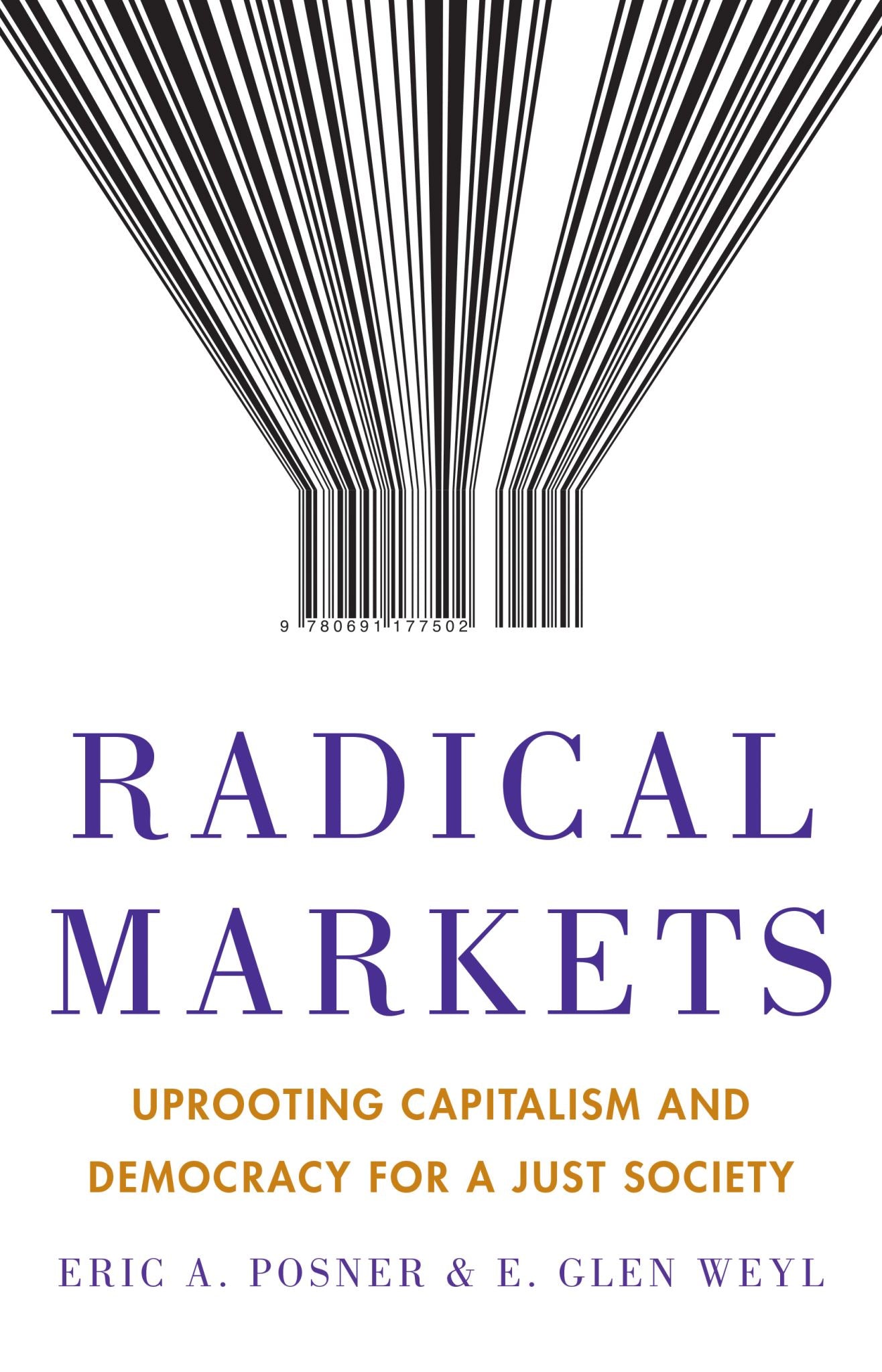

Description
Explore transformative ideas in 'Radical Markets', a groundbreaking book by Eric Posner and Glen Weyl that challenges conventional economic wisdom. Delve into the innovative approaches presented within these pages, where the authors advocate for reimagining markets to promote fairness and prosperity. This insightful read addresses pressing issues like economic inequality, stagnation, and political instability, suggesting that true progress lies not in limiting markets, but in radically redefining them.
With fresh perspectives on private property, the authors argue that transitioning ownership into a public auction system could benefit everyone. Gain valuable insights into how changing voter dynamics can empower citizens while also advocating for a fair immigration process that supports both migrants and local populations.
The book presents compelling arguments for leveraging antitrust laws to break the stronghold of institutional investors on markets and highlights the necessity for a data labor movement to ensure fair compensation for personal data usage.
'Radical Markets' exemplifies how extensive market reforms can address pressing societal challenges, aiming to restore economic growth and reduce inequality. This brand new edition is published by Princeton University Press and comes in trade binding format, with an ISBN of 9780691177502.
Note: Shipping for this item is free. Please allow up to 6 weeks for delivery. Once your order is placed, it cannot be cancelled.
Note: Shipping for this item is free. Please allow up to 6 weeks for delivery. Once your order is placed, it cannot be cancelled.
Condition: BRAND NEW
ISBN: 9780691177502
Format: Trade binding
Year: 2018
Publisher: Princeton University Press
Description:
Revolutionary ideas on how to use markets to bring about fairness and prosperity for all
Many blame today's economic inequality, stagnation, and political instability on the free market. The solution is to rein in the market, right? Radical Markets turns this thinking-and pretty much all conventional thinking about markets, both for and against-on its head. The book reveals bold new ways to organize markets for the good of everyone. It shows how the emancipatory force of genuinely open, free, and competitive markets can reawaken the dormant nineteenth-century spirit of liberal reform and lead to greater equality, prosperity, and cooperation.
Eric Posner and Glen Weyl demonstrate why private property is inherently monopolistic, and how we would all be better off if private ownership were converted into a public auction for public benefit. They show how the principle of one person, one vote inhibits democracy, suggesting instead an ingenious way for voters to effectively influence the issues that matter most to them. They argue that every citizen of a host country should benefit from immigration-not just migrants and their capitalist employers. They propose leveraging antitrust laws to liberate markets from the grip of institutional investors and creating a data labor movement to force digital monopolies to compensate people for their electronic data.
Only by radically expanding the scope of markets can we reduce inequality, restore robust economic growth, and resolve political conflicts. But to do that, we must replace our most sacred institutions with truly free and open competition-Radical Markets shows how.
With fresh perspectives on private property, the authors argue that transitioning ownership into a public auction system could benefit everyone. Gain valuable insights into how changing voter dynamics can empower citizens while also advocating for a fair immigration process that supports both migrants and local populations.
The book presents compelling arguments for leveraging antitrust laws to break the stronghold of institutional investors on markets and highlights the necessity for a data labor movement to ensure fair compensation for personal data usage.
'Radical Markets' exemplifies how extensive market reforms can address pressing societal challenges, aiming to restore economic growth and reduce inequality. This brand new edition is published by Princeton University Press and comes in trade binding format, with an ISBN of 9780691177502.
Note: Shipping for this item is free. Please allow up to 6 weeks for delivery. Once your order is placed, it cannot be cancelled.
Note: Shipping for this item is free. Please allow up to 6 weeks for delivery. Once your order is placed, it cannot be cancelled.
Condition: BRAND NEW
ISBN: 9780691177502
Format: Trade binding
Year: 2018
Publisher: Princeton University Press
Description:
Revolutionary ideas on how to use markets to bring about fairness and prosperity for all
Many blame today's economic inequality, stagnation, and political instability on the free market. The solution is to rein in the market, right? Radical Markets turns this thinking-and pretty much all conventional thinking about markets, both for and against-on its head. The book reveals bold new ways to organize markets for the good of everyone. It shows how the emancipatory force of genuinely open, free, and competitive markets can reawaken the dormant nineteenth-century spirit of liberal reform and lead to greater equality, prosperity, and cooperation.
Eric Posner and Glen Weyl demonstrate why private property is inherently monopolistic, and how we would all be better off if private ownership were converted into a public auction for public benefit. They show how the principle of one person, one vote inhibits democracy, suggesting instead an ingenious way for voters to effectively influence the issues that matter most to them. They argue that every citizen of a host country should benefit from immigration-not just migrants and their capitalist employers. They propose leveraging antitrust laws to liberate markets from the grip of institutional investors and creating a data labor movement to force digital monopolies to compensate people for their electronic data.
Only by radically expanding the scope of markets can we reduce inequality, restore robust economic growth, and resolve political conflicts. But to do that, we must replace our most sacred institutions with truly free and open competition-Radical Markets shows how.