

Description
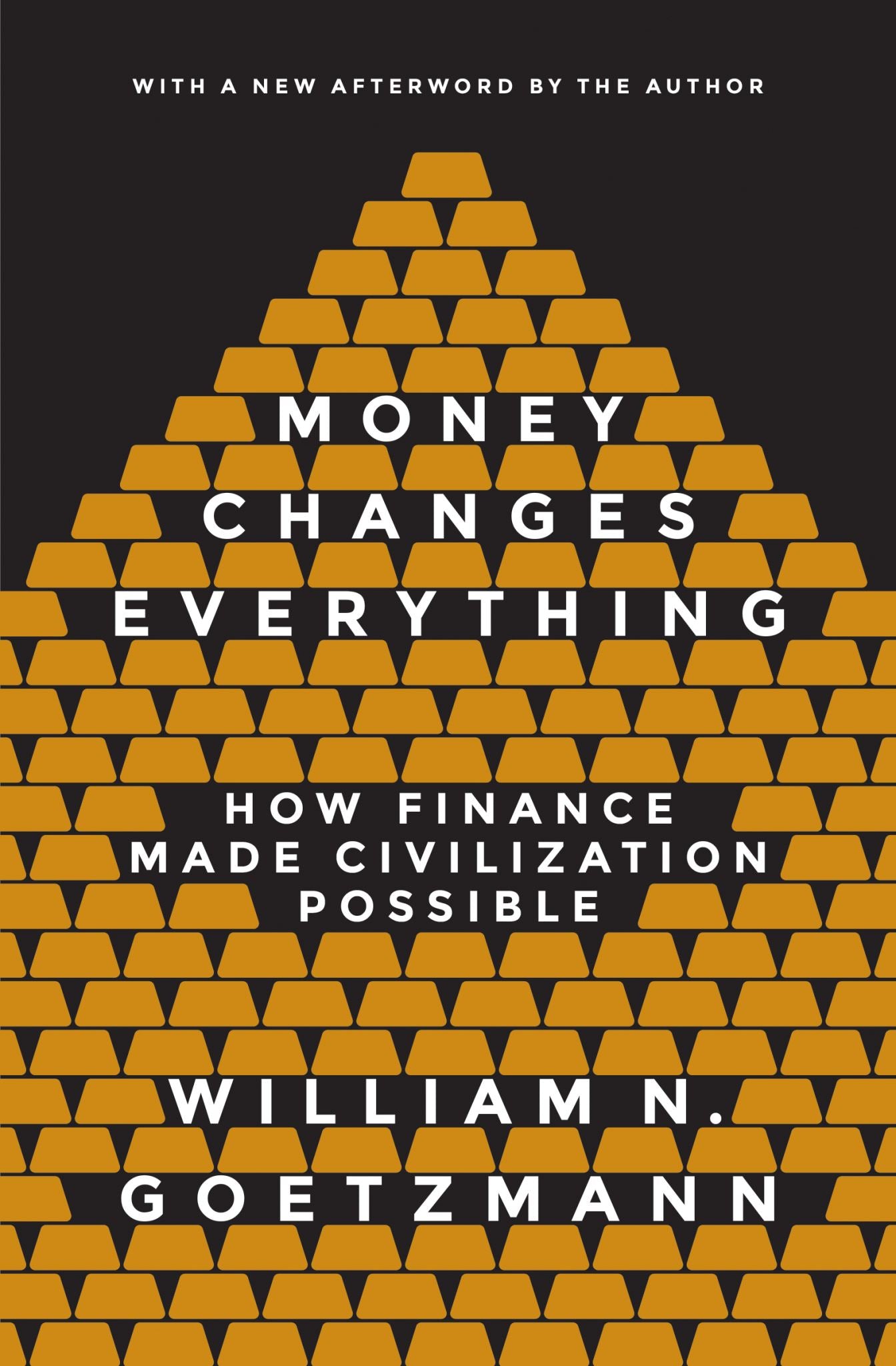
Discover the transformative insights in *Money Changes Everything*, a compelling exploration by financial historian William Goetzmann. This revolutionary book illuminates how money and finance have shaped civilizations across time, presenting finance as an essential force for progress rather than destruction. Goetzmann, with a keen eye for historical detail, dissects how pivotal financial innovations have fueled monumental events— from the rise of ancient Mesopotamia's writing systems to the emergence of capitalist economies. Return to key historical moments where finance was a catalyst: from the grand empires of Greece and Rome to the maritime trade that opened the New World. This brand new trade paperback published by Princeton University Press in 2017 delves into complex financial products, stock markets, and the art of credit, showcasing their vast influence on our modern world. Learn how finance acts as a time machine, allowing us to navigate market dynamics and plan future developments. With free shipping and a delivery timeframe of up to 6 weeks, explore the historical significance of finance today and grab your copy now to see how money truly changes everything!
Note: Shipping for this item is free. Please allow up to 6 weeks for delivery. Once your order is placed, it cannot be cancelled.
Condition: BRAND NEW
ISBN: 9780691178370
Format: Trade paperback (US)
Year: 2017
Publisher: Princeton University Press
Description:
"[A] magnificent history of money and finance."--New York Times Book Review "Convincingly makes the case that finance is a change-maker of change-makers."--Financial Times In the aftermath of recent financial crises, it's easy to see finance as a wrecking ball: something that destroys fortunes and jobs, and undermines governments and banks. In Money Changes Everything, leading financial historian William Goetzmann argues the exact opposite--that the development of finance has made the growth of civilizations possible. Goetzmann explains that finance is a time machine, a technology that allows us to move value forward and backward through time; and that this innovation has changed the very way we think about and plan for the future. He shows how finance was present at key moments in history: driving the invention of writing in ancient Mesopotamia, spurring the classical civilizations of Greece and Rome to become great empires, determining the rise and fall of dynasties in imperial China, and underwriting the trade expeditions that led Europeans to the New World.
He also demonstrates how the apparatus we associate with a modern economy--stock markets, lines of credit, complex financial products, and international trade--were repeatedly developed, forgotten, and reinvented over the course of human history. Exploring the critical role of finance over the millennia, and around the world, Goetzmann details how wondrous financial technologies and institutions--money, bonds, banks, corporations, and more--have helped urban centers to expand and cultures to flourish. And it's not done reshaping our lives, as Goetzmann considers the challenges
Note: Shipping for this item is free. Please allow up to 6 weeks for delivery. Once your order is placed, it cannot be cancelled.
Condition: BRAND NEW
ISBN: 9780691178370
Format: Trade paperback (US)
Year: 2017
Publisher: Princeton University Press
Description:
"[A] magnificent history of money and finance."--New York Times Book Review "Convincingly makes the case that finance is a change-maker of change-makers."--Financial Times In the aftermath of recent financial crises, it's easy to see finance as a wrecking ball: something that destroys fortunes and jobs, and undermines governments and banks. In Money Changes Everything, leading financial historian William Goetzmann argues the exact opposite--that the development of finance has made the growth of civilizations possible. Goetzmann explains that finance is a time machine, a technology that allows us to move value forward and backward through time; and that this innovation has changed the very way we think about and plan for the future. He shows how finance was present at key moments in history: driving the invention of writing in ancient Mesopotamia, spurring the classical civilizations of Greece and Rome to become great empires, determining the rise and fall of dynasties in imperial China, and underwriting the trade expeditions that led Europeans to the New World.
He also demonstrates how the apparatus we associate with a modern economy--stock markets, lines of credit, complex financial products, and international trade--were repeatedly developed, forgotten, and reinvented over the course of human history. Exploring the critical role of finance over the millennia, and around the world, Goetzmann details how wondrous financial technologies and institutions--money, bonds, banks, corporations, and more--have helped urban centers to expand and cultures to flourish. And it's not done reshaping our lives, as Goetzmann considers the challenges